MNC 2026 Invited Speakers List |
1-2: Electron and Ion Beam Technologies | |
Dr. Kevin Anthony Hofhuis, Paul Scherrer Institut, Switzerland

Paper Title
High-Precision Electron-Beam Fabrication of Variable-Line-Spacing Blazed Gratings on Curved Silicon
Short Biography
Kevin Hofhuis is a tenure-track scientist in the Nanotechnology Group at the Paul Scherrer Institute (PSI), Switzerland. He received his BSc and two MSc degrees cum-laude from the University of Twente and completed his PhD jointly at ETH Zurich and PSI, followed by postdoctoral research at Yale University, USA. His work now focuses on advanced electron-beam lithography, grayscale nanofabrication, high-precision pattern placement, photonics, quantum devices, and the development of diffractive X-ray optics on challenging substrates. | |
2-1: Nanocarbon & 2D Materials | |
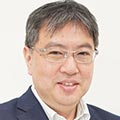
Prof. Hideki Maki, Keio University and Graphenory Inc., Japan
Paper Title
On-chip optoelectronic devices based on nanocarbon materials
Short Biography
Hideyuki Maki is a Professor at Keio University. He received his B.S. (1998), M.S. (1999), and Ph.D. (2002) from Waseda University. From 2002–2005, he was a Special Postdoctoral Researcher in the Nanodevice group at RIKEN. He then joined Keio University as Assistant Professor (2005–2009), Lecturer (2009–2012), Associate Professor (2012–2020), and Professor (2021–present). He was a visiting researcher in the Holleitner group at TUM's Walter Schottky Institut (2010–2011). He has received awards from the Japan Society of Applied Physics and the Fullerenes, Nanotubes and Graphene Research Society. In 2024, he founded Graphenory Inc., serving as COO and CTO. | |
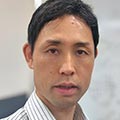
Prof. Yuta Nishina, Okayama University, Japan
Paper Title
Oxidative Exfoliation of Graphite into 2D Nanocarbons
Short Biography
Yuta Nishina is a Distinguished Professor at the Research Institute for Interdisciplinary Science, Okayama University, Japan. His research focuses on sustainable chemistry, carbon-based functional materials, graphene-related technologies, and their applications in energy and environmental fields. He has pioneered innovative approaches for the synthesis and functionalization of graphene oxide and related materials, contributing to advances in energy storage, catalysis, and sustainable manufacturing. He has authored numerous scientific publications and actively collaborates with researchers worldwide. His work aims to bridge fundamental materials science with practical solutions for a sustainable society. | |
2-2: Nanodevices | |
Prof. Masaharu Kobayashi, The University of Tokyo, Japan

Paper Title
Nanoscale Oxide Semiconductor Transistor Technology for Memory Application
Short Biography
Masaharu Kobayashi, Ph.D. is a professor at The University of Tokyo. His current research interest is nanoelectronic device for energy-efficient computing.
Prior to joining The University of Tokyo, Prof. Kobayashi was a Research Staff Member in IBM Watson Research Center. During his 4 years at IBM, he was involved in exploratory device research for beyond-10nm technology node. He also contributed to 14nm SOI CMOS technology development.
Prof. Kobayashi received a Ph.D degree in Electrical Engineering from Stanford University, Stanford, California, USA. He is a senior member of IEEE. He is serving for program committee of VLSI Symposium and IRPS.
| |
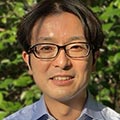
Prof. Daisuke Kiriya, The University of Tokyo, Japan
Paper Title
Molecular chemical processing for modulating 2D semiconductors
Short Biography
Dr. Daisuke Kiriya is an associate professor at the University of Tokyo. He obtained his B.S., M.S., and Ph.D. from the School of Engineering at Kyoto University, Japan, in 2004, 2006, and 2009, respectively, under Professors Susumu Kitagawa and Ho-Chol Chang. From 2009 to 2011, he served as an assistant professor at the University of Tokyo. In 2012, he joined the University of California, Berkeley. In 2016, he joined Osaka Prefecture University as an assistant professor and associate professor in 2020. From 2022, he served as an associate professor at the University of Tokyo. | |
2-3: Nanofabrication | |
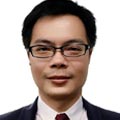
Prof. Yong He, Chongqing University, China
Paper Title
Post-Transition Metal Selenide-Based Gas Sensors: From Rational Material Engineering to Artificial Olfaction
Short Biography
Yong He received the Ph.D. degree in material physics and chemistry from Shanghai Institute of Ceramics, Chinese Academy of Sciences, Shanghai, China, in 2011. He was a specially appointed researcher the Institute of Scientific and Industrial Research, Osaka University, Japan from 2011 to 2015. Since 2015, he has been with Institute for Materials Chemistry and Engineering, Kyushu University, Japan, where he was a research fellow. In 2017, he joined the College of Optoelectronic Engineering, Chongqing University, China, as a Hundred Talents Researcher of Chongqing University. | |
Dr. Chia-Tsong Chen, AIST, Japan

Paper Title
Process development for Si nanosheet GAAFET on 300 mm wafer: inner spacer formation and channel release
Short Biography
Chia-Tsong Chen is a researcher of National Institute of Advanced Industrial Science and Technology (AIST), Tsukuba, Japan. He received Ph.D. degree from the University of Tokyo in 2022. His research interest includes innovations for advanced CMOS technologies and back-end of line monolithic 3D integration.
| |
Prof. Stella W. Pang, City University of Hong Kong

Paper Title
Plasmonic Biosensors and Meta-Devices by 3D Nanotechnology
Short Biography
Stella W. Pang is a Chair Professor in the Department of Electrical Engineering at City University of Hong Kong, China, and Director of the Center for Biosystems, Neuroscience, and Nanotechnology. She worked at MIT Lincoln Laboratory (1981–1989) and later served at the University of Michigan (1990–2011) as Professor of Electrical Engineering and Computer Science and Associate Dean in the College of Engineering. Her research spans nanofabrication for biomedical systems, terahertz devices, and optical/meta devices. She has taught 35 related short courses and is a Fellow of IEEE, ECS, AVS, HKIE, and HKAE. | |
2-5: Organic Nanomaterials | |
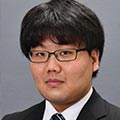
Prof. Kentaro Aoki, Japan Advanced Institute of Science and Technology, Japan
Paper Title
Tailored Control of Ion Transport: From Molecular Design to Device Applications
Short Biography
Kentaro Aoki is currently an Assistant Professor in the Materials Chemistry Frontiers Research Area at the Japan Advanced Institute of Science and Technology (JAIST). He received his Ph.D. in Science from Kyoto University in 2022, where he was also a JSPS Research Fellow from 2019 to 2022. He subsequently joined JAIST as an Assistant Professor. His research interests include the design of functional materials based on metal complexes and polymers, solid-state ionics, and their applications in energy devices. | |
2-6: Nano Surfaces, Interfaces, and Advanced Nano Metrology | |
Prof. Ming-Wen Chu, National Taiwan University, Taiwan

Paper Title
Deriving the effective mass, Fermi velocity, and screening length of charges by momentum-resolved electron energy loss spectroscopy
Short Biography
Dr. Ming-Wen Chu is the Distinguished Research Fellow and also Director in Center for Condensed Matter Sciences at National Taiwan University. He is the leader of the first and only scanning transmission electron microscopy laboratory (2005~) in Taiwan and continuously dedicated to the development and application of electron energy loss spectroscopy (EELS) in condensed matter physics. His recent research focuses are devoted to momentum(q)-resolved EELS (q-EELS) and cryogenic atomic-scale EELS (cryo Å-EELS) for many-body phenomena in quantum matters, with the particular focus on electronic density-wave correlations. | |
3: Nanoimprint, Hybrid-NIL, Biomimetics, and Functional Surfaces | |
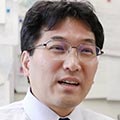
Prof. Motoyasu Kobayashi, Kogakuin University, Japan
Paper Title
Marine Antifouling Technology by Hydrophilic Polymer Brush Nano Layers
Short Biography
Motoyasu Kobayashi received his Ph.D. in 2000 from the Tokyo Institute of Technology, Japan, and was appointed as an assistant professor in the Faculty of Engineering, Yamagata University, Japan. From 2004 to 2008, he worked as an assistant professor in the Institute for Materials Chemistry and Engineering, Kyushu University. He was a group leader of the JST-ERATO project from 2009 to 2012. He is currently a professor and Associate Vice President of Kogakuin University, Japan. His research interests are polymer synthesis, surface and interface science, and soft materials.
| |
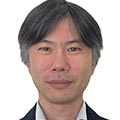
Mr. Takashi Sekito, Merck Electronics, Japan
Paper Title
Inkjet-Based Adaptive Planarization Materials
Short Biography
Takashi Sekito is an R&D Manager for EMD Electronics, holding a Master of Science and Technology from Yamagata University in Japan. With over 20 years of experience in semiconductor materials research and development, he has significantly advanced pattern shrink technologies and Spin-on Carbon (SoC) materials, including Spin-on Planarization Carbon materials. His recent focus on Inkjet-based Adaptive Planarization (IAP) materials aims to improve fabrication efficiency by addressing current challenges in manufacturing processes. By leveraging inkjet technology, he develops innovative materials to achieve superior surface flatness and precision in semiconductor devices. | |
4: BioMEMS, Lab on a Chip, and Nanobiotechnolog | |
Prof. Kaoru Tamada, Kyushu University, Japan

PAPER TITLE
Self-Assembled Nanomaterials:from Fundamentals to Applications
Short Biography Kaoru Tamada is a senior vice president and distinguished professor in the Institute for Materials Chemistry and Engineering (IMCE), Kyushu University. She obtained her doctor of science in 1994 from the Nara Women's University after several years experiences in Japanese chemical industry and the University of Wisconsin-Madison. After a postdoc at RIKEN, she joined the NIMC (reorganized to AIST) as a Senior Scientist, Tokyo Institute of Technology as an Associate Professor, and Tohoku University as a professor. She moved to Kyushu University in 2011. She had several years oversea research experiences in Australian National University (ANU), Max-Planck Institute for Polymer Research (MPIP) and the National University of Singapore (NUS). Her research focusses in nanoscience and nanointerface, especially, assembly of molecules and nanomaterials, surface plasmon resonances and metamaterials, and their bio and device applications. She received the surface science society of Japan award in 2018. She is also an Associated Editor in ACS Applied Nano Materials. | |
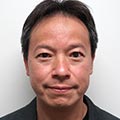
Prof. Tomohiro Hayashi, Institute of Science Tokyo, Japan
PAPER TITLE
Written in water: interfacial behavior of water molecules and anti-biofouling property.
Short Biography Tomohiro Hayashi received his bachelor's degree from Waseda University (1997), his master's from the University of Tsukuba (2000), and his Ph.D. from Ruprecht-Karls Universität Heidelberg (2003). After postdoctoral research at Tokyo Tech and a permanent post at AIST (2006), he joined Tokyo Tech as an assistant professor (2007) and became an associate professor in 2010. In 2023, he founded Everon Technologies (CEO) and Motrino, Inc. (CTO). His thirteen awards include the Asahi Kasei Award (2011) and the JSPS Young Researchers' Award (2018). His research develops surface and interfacial analytical techniques for biointerfaces—combining atomic force microscopy with laser spectroscopy—single-molecule dynamic force measurements, and materials informatics for biomaterial design. | |
| |
5: Microsystem Technology and MEMS | |
Prof. Harold Chong, Univ. of Southampton, UK
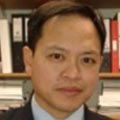
PAPER TITLE
Low-Temperature Metal Oxides as Semiconductors and Dielectrics for BEOL Integration with Microsystems
Short Biography Harold M. H. Chong is Professor of Electronic Engineering at the University of Southampton. He received his PhD in Electrical and Electronic Engineering from the University of Glasgow, UK, in 2004. He joined the University of Southampton in 2007 and was promoted to Professor in 2018. His research focuses on thin-film semiconductor electronic, MEMS, and optoelectronic devices for integrated circuits and sensing, including low-temperature processes such as atomic layer deposition. He has authored and co-authored more than 200 journal and conference papers in oxide semiconductor devices, MEMS, and photonics. | |
| |
| |
Please see the list of invited speakers of symposium from following site.
SYMPOSIUM and SYMPOSIUM INVITED SPEAKERS LIST
|
Symp. A | AI × High-NA EUV × Novel Materials × Sustainability
Joint Symposium of 1. Lithography and 6. ALP
SYMPOSIUM |  |
Symp. B | Process and Device Technologies for Quantum Computing IV | |
Symp. C | Artificial Intelligence and Machine Learning in Biomedical Research and Applications | |
| |