
Plenary Speaker

High-NA Lithography at the Turning Point: Preparing for Industry Insertion
Geert Vandenberghe received his MSc and PhD degree from the Katholieke Universiteit of Leuven in Belgium and is SPIE Fellow.
In 1995 he joined the Lithography Department at imec where he has been working in different roles and various areas such as resists, patterning, imaging, OPC, resolution enhancement techniques, and on various lithography technologies ranging from DUV, immersion to EUV, all in the framework on imec’s Advanced Lithography Research Programs at imec. Currently he is Vice President Patterning R&D, which is including the high NA EUV programs at imec and in the high NA Lab at ASML.
Extreme ultraviolet lithography (EUVL) continues to make scaling cost effective for chip manufacturers and allows Moore`s law to pursue. EUVL entered high volume production in 2019 and the next step in this evolutionary process is the implementation of High NA EUVL with its increased Numerical Aperture (NA) of 0.55, which enables further scaling down to 8nm.
The key to unlocking the full potential of High NA EUV lithography lies in the co-optimization of various elements: the scanner, mask, resist stack, and etch. By achieving an optimal synergy between these components, we can ensure the highest performance levels for High NA EUV lithography. This is done in close collaboration with imec’s 40+ equipment and materials suppliers, creating the world’s largest ecosystem around EUV lithography.

Advances in Spin-based Quantum Computing in Silicon
Seigo Tarucha received the B. E. and M. S. degrees from the University of Tokyo in 1976 and 1978, respectively. He joined NTT in 1978 and received the Ph. D degree in applied physics from the University of Tokyo in 1986. In 1998 he moved to the University of Tokyo as a professor in the Phys. Dept. and then to the Appl. Phys. Dept. in 2004. In 2019 he retired from the University of Tokyo and since then has been fully affiliated to RIKEN Center for Emergent Matter Science (CEMS). He has been running a research group in CEMS since 2012 and additionally a research team in Center for Quantum Computing (RQC) since 2021. His current research interests have focused on spin-based quantum computing. He received Kubo Ryogo award, Nishina award in 2002, National medal with purple ribbon in 2004, Leo Esaki Award in 2007, Achievement award of Japan Applied Physics Society in 2018, and Fujiwara Award in 2023.
Over the past two decades, research on quantum computing (QC) has advanced rapidly from theoretical concepts to experimental realizations across various quantum platforms. Among these platforms, quantum dot (QD)-based QC—although initiated somewhat later—has recently gained significant attention owing to their compact device footprint and the strong compatibility of fabrication processes with advanced semiconductor manufacturing technologies. Major semiconductor companies such as Intel, imec, and CEA-Leti are now actively developing semiconductor qubit devices. Our research focuses on the physics of silicon quantum dot devices that employ electron spins as qubits, exploring both their fundamental properties and their applications to QC. In this talk. I will then review current challenges in advancing toward scalable QC, focusing on fault-tolerant operations, error correction, and pathways to large-scale integration.
Advanced Organic Optoelectronic Devices: Precise Control of Charge-Transfer States
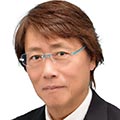
Prof. Chihaya Adachi obtained his doctorate in Materials Science and Technology in 1991 from Kyushu University. He held positions as a research chemist and physicist in the Chemical Products R&D Center at Ricoh Co., a research associate at Shinshu University, a research staff at Princeton University, and an associate professor and professor at Chitose Institute of Science and Technology. In 2005, he returned to Kyushu University as a professor and was promoted to a distinguished professor in 2010, and his current posts also include director of Kyushu University’s Center for Organic Photonics and Electronics Research (OPERA) since 2010 and director of the Fukuoka i3 Center for Organic Photonics and Electronics Research since 2013. His research has been concentrated on organic synthesis, device fabrication, and optical and electrical device characterization of organic semiconductors. He has been serving as an editor of “Organic Electronics” (Elsevier) (2007-2019) and CCS Chemistry (2019-). His publications include over 670 research papers. He was selected as a highly cited researcher (Clarivate) (2018-2025).
Seigo Tarucha received the B. E. and M. S. degrees from the University of Tokyo in 1976 and 1978, respectively. He joined NTT in 1978 and received the Ph. D degree in applied physics from the University of Tokyo in 1986. In 1998 he moved to the University of Tokyo as a professor in the Phys. Dept. and then to the Appl. Phys. Dept. in 2004. In 2019 he retired from the University of Tokyo and since then has been fully affiliated to RIKEN Center for Emergent Matter Science (CEMS). He has been running a research group in CEMS since 2012 and additionally a research team in Center for Quantum Computing (RQC) since 2021. His current research interests have focused on spin-based quantum computing. He received Kubo Ryogo award, Nishina award in 2002, National medal with purple ribbon in 2004, Leo Esaki Award in 2007, Achievement award of Japan Applied Physics Society in 2018, and Fujiwara Award in 2023.
In organic optoelectronic devices, high performance has been achieved through precise molecular design that incorporates diverse electron-donating and electron-accepting units. These molecular architectures enable fine control over charge transport, exciton formation, charge separation, and even spontaneous dipole orientation in thin films.
From the perspective of charge-transfer phenomena, this presentation will focus on strategies to enhance both the efficiency and operational stability of organic light-emitting diodes (OLEDs). Furthermore, we elucidate the relationship between molecular-level design and macroscopic device performance, and provide an outlook on future directions in advanced organic optoelectronic devices.

Reconfigurable Nonlinear-Processing Units
Wilfred G. van der Wiel (Gouda, 1975) is full professor of Nanoelectronics, co-director of the BRAINS Center for Brain-Inspired Computing, and co-chair of the Department of Electrical Engineering at the University of Twente, The Netherlands. He holds a second professorship at the Institute of Physics, University of Münster, Germany. His research focuses on unconventional electronics for efficient information processing. Van der Wiel is a pioneer in material learning at the nanoscale and in the development of reconfigurable nonlinear-processing units (RNPUs), realizing computational functionality and artificial intelligence directly in nanomaterial substrates through principles analogous to machine learning. He has authored more than 125 journal articles, receiving over 15,000 citations.
More Information
Full list of publications
Artificial intelligence hardware is commonly optimized for linear operations, yet the expressive power of neural networks depends critically on nonlinear transformations. Reconfigurable nonlinear-processing units (RNPUs) offer a complementary silicon-based route in which nonlinear computation is implemented directly in physical devices. These multi-terminal nanoelectronic structures provide tunable input-output characteristics controlled by electrical signals, allowing a single substrate to realize many computational transformations. RNPUs have been used for classification, in-materia optimization, analogue speech recognition, and physical implementations of nonlinear building blocks for Kolmogorov-Arnold Networks. Recent insight into their charge-transport mechanism identifies space-charge effects as the origin of their strong, tunable nonlinearity, opening a path toward planar, CMOS-compatible silicon designs. Together, these advances position RNPUs as hardware-native nonlinear primitives beyond conventional linear-acceleration paradigms.
